There are results that we have been able to measure, results of better optimization of costs, in this case, the planning resources.”
François Willemin
Data Management Director Vivetic Group
Data Management Director Vivetic Group
Optimized Workforce Planning & Scheduling for Measurable Results
Create the most efficient annual, monthly or weekly plans, daily schedules and routes for your workforce with the world’s most flexible planning and scheduling optimization software. Replace your manual process or legacy system with a tailored solution with an ROI in under a year.
Boost efficiency in facility management and maintenance with optimized planning and scheduling.
DecisionBrain delivers tailored Labor Forecasting, Workforce Planning, and Employee Scheduling systems that leverage advanced analytics, machine learning/prediction and mathematical optimization technologies to tackle complex planning and scheduling problems that aren’t well met by existing applications on the market.
Our modular solutions are a fit for organizations with hundreds or thousands of employees and complex operational demands. Whether you’re coordinating geographically dispersed teams, navigating unpredictable work demands, managing a mix of planned and reactive tasks, or balancing last-minute changes, our system supports you in creating plans and schedules that work.
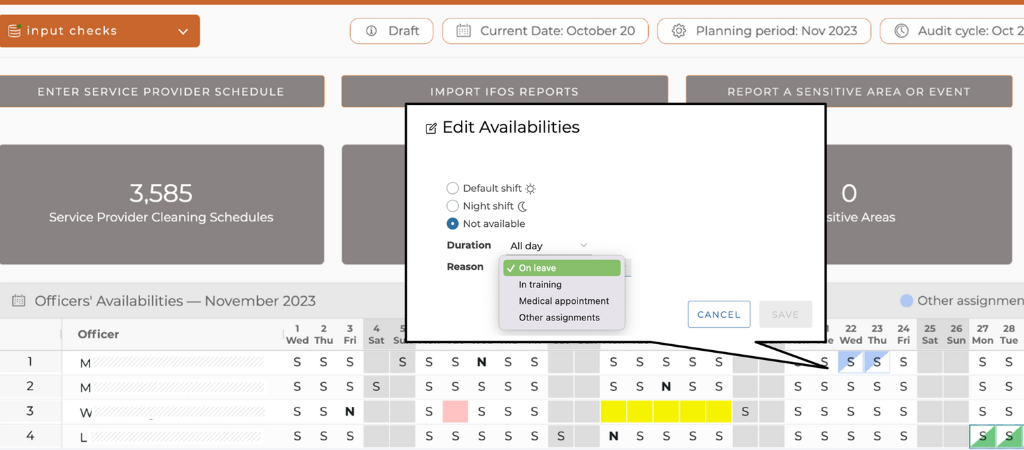
It intelligently considers varying cost structures, skill requirements, material and equipment availability, diverse work windows, fluctuating customer priorities, and critical employee entitlements to create effective plans that balance across various objectives such as efficiency and service level targets.
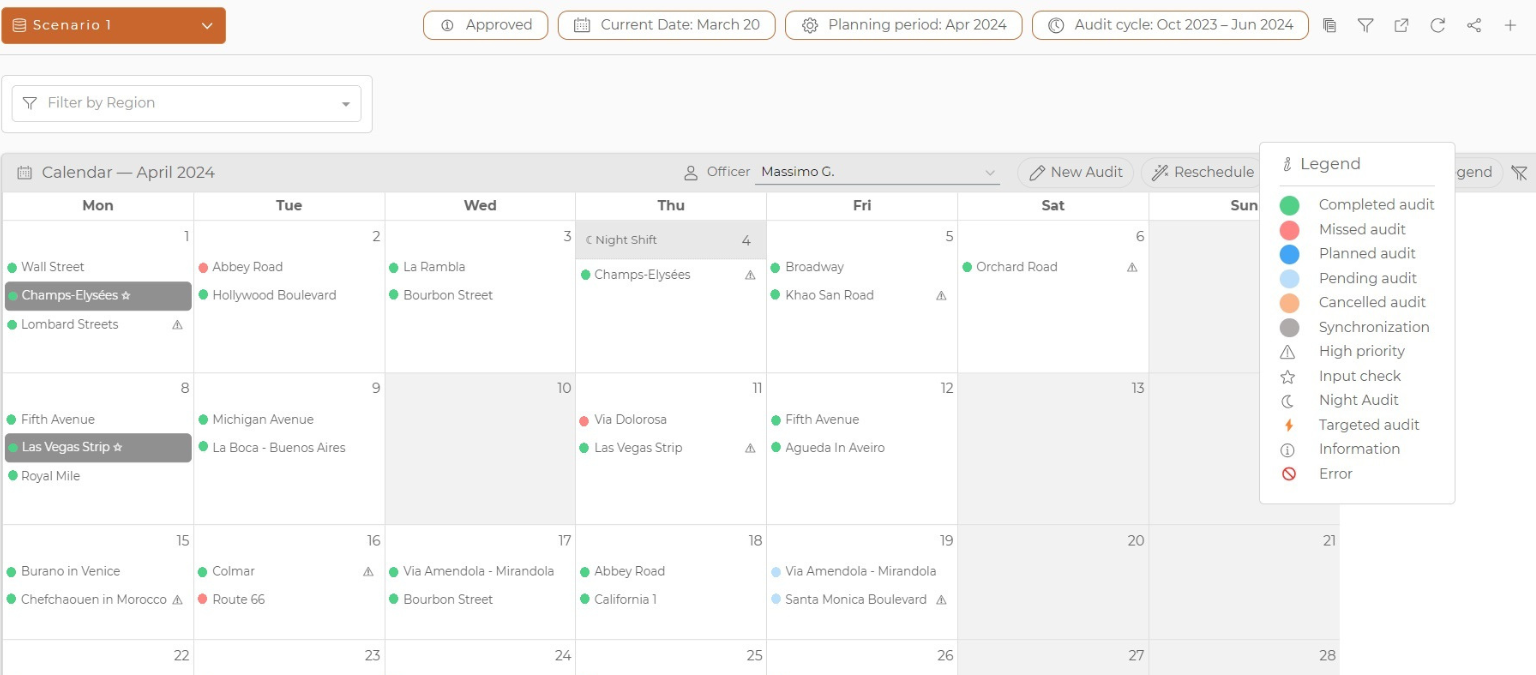
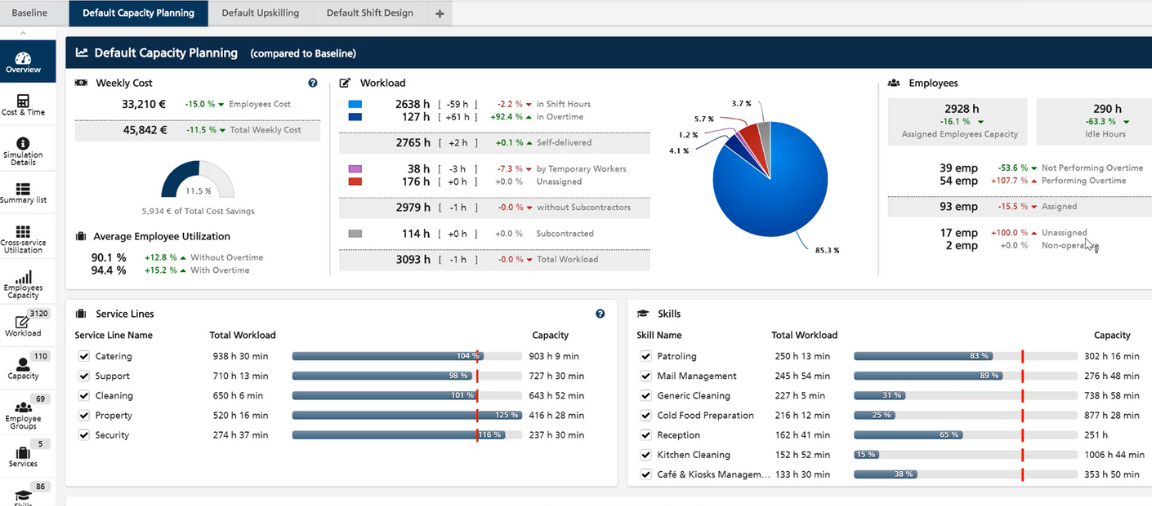
Users then fine-tune the parameters that drive the plans or schedules, testing out different parameters and comparing scenarios to understand the tradeoffs and impacts of different approaches both visually and through KPIs.
We help you plan and schedule your workforce across strategic, tactical and operational time horizons, either individually or through an integrated approach.
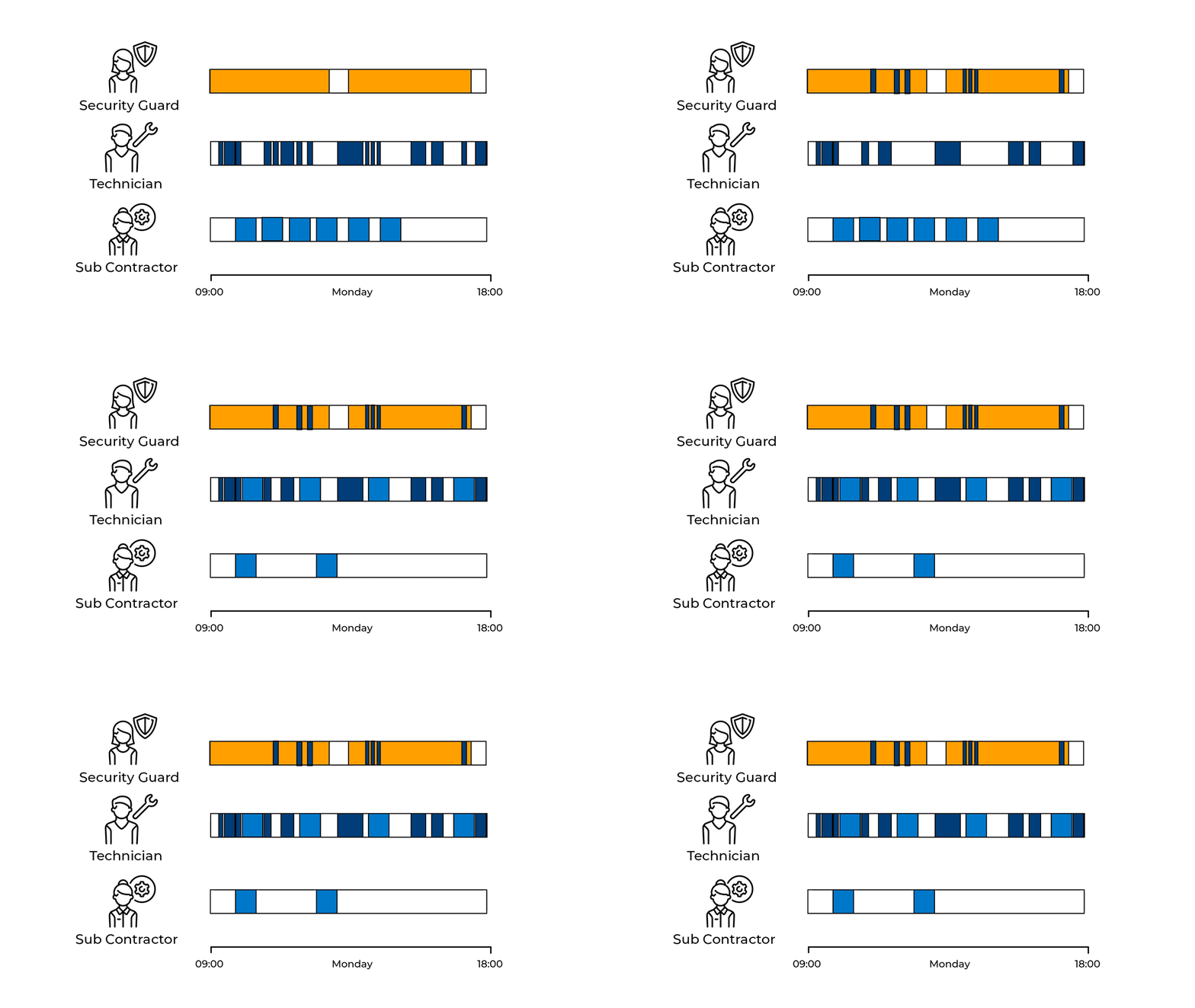
Rough-cut planning on a monthly or quarterly basis
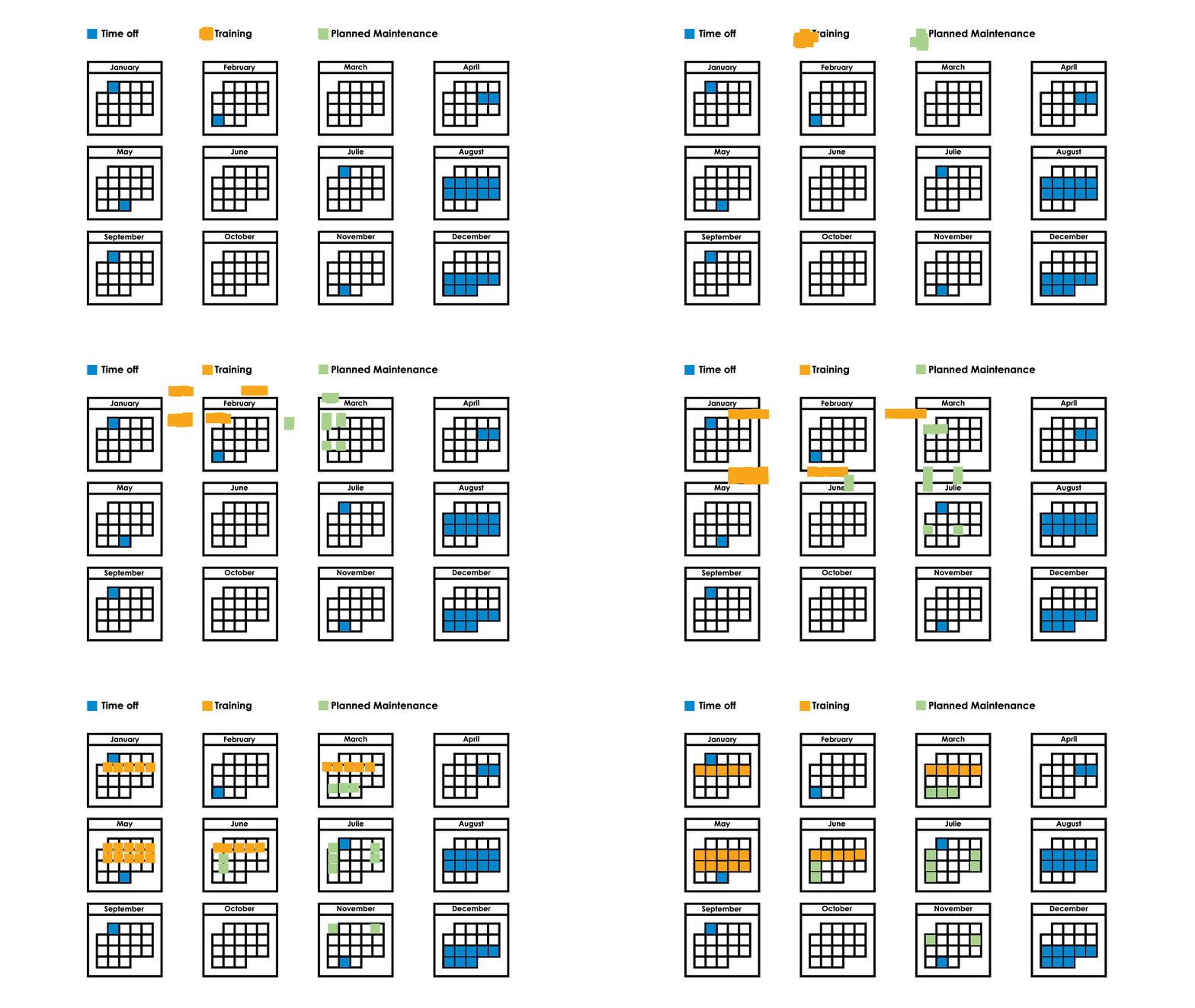
On a Weekly, Daily or Real-Time Basis
Q: How do mathematical optimization techniques improve long-term workforce configuration compared to heuristic planning?
A: Mathematical optimization techniques help organizations design more efficient workforce structures by balancing staffing levels, shift models, service targets, labor constraints, and operational costs.
Traditional workforce planning often relies on historical patterns and manual decision-making, which can reinforce inefficiencies over time. Mathematical optimization algorithms evaluate a wide range of workforce scenarios simultaneously, using business objectives and operational constraints to identify more effective configurations. These models can incorporate factors such as labor agreements, employee qualifications, territory coverage, and demand forecasts to support more informed long-term workforce decisions while maintaining service quality and compliance.
Q: What are the foundational capabilities required in a modern strategic workforce optimization software platform?
A: Modern workforce optimization platforms require four core capabilities: demand planning and forecasting, integrated resource management, scenario management, and key performance indicator (KPI) management.
These capabilities work together to transform operational data into actionable workforce decisions. Demand forecasting helps organizations anticipate future service needs across a 1–3 year horizon, while resource management provides visibility into workforce availability, skills, and constraints. Scenario analysis allows planners to compare alternative workforce strategies under different business conditions, and KPI monitoring measures the impact of each scenario across metrics such as cost, service levels, workforce utilization, and operational efficiency.
Q: How do strategic workforce plans translate into daily operational schedules and rosters?
A: Strategic workforce plans provide the foundation for tactical planning and daily scheduling activities.
Effective workforce planning requires alignment between long-term strategy and day-to-day operations. Strategic plans define key elements such as workforce size, territory structures, and shift models, which then guide tactical planning decisions related to vacations, training schedules, contractor allocation, and medium-term capacity adjustments. Operational scheduling systems can then generate daily rosters that remain aligned with broader business goals, helping organizations improve consistency, responsiveness, and resource utilization across the entire planning horizon.
Q: How does optimizing mobile workforce service territory lines impact operational travel time versus service time?
A: Optimized service territory design helps organizations reduce unnecessary travel while maximizing the time mobile employees spend delivering services.
Historical or manually defined territories often create inefficient routing patterns, increasing travel time and limiting workforce productivity. Optimization models analyze factors such as service demand patterns, technician skills, geographic density, and travel conditions to design more balanced territories. This approach helps organizations improve workforce coverage, reduce transportation costs, increase productive service time, and support stronger customer service performance.
Q: Why should an enterprise deploy custom optimization applications rather than standard packaged HR workforce tools?
A: Custom optimization solutions allow organizations to model highly specific operational constraints, business rules, and planning objectives that standard workforce management tools may not fully support.
Traditional workforce management platforms are well suited for administrative functions such as attendance tracking, payroll support, and basic scheduling. However, complex workforce planning environments often require more advanced decision-making capabilities. Custom optimization solutions can incorporate unique labor agreements, regional operating constraints, subcontractor strategies, and multi-objective planning trade-offs into a single decision framework. They also enable organizations to run advanced scenario analyses and evaluate the operational impact of different strategies before implementation.
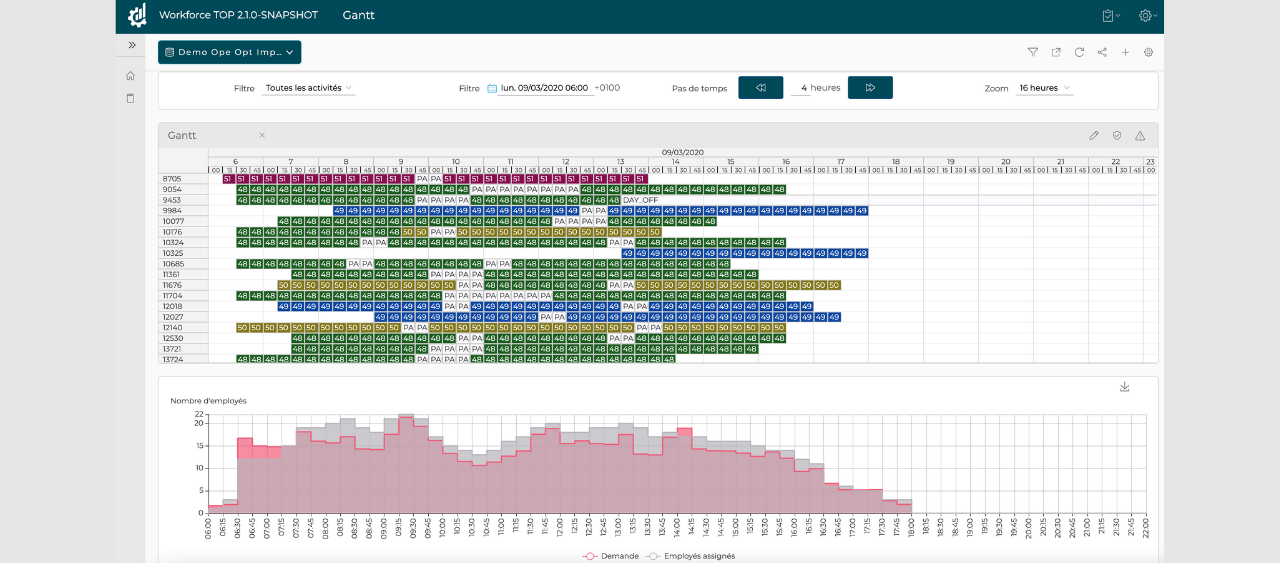
Create optimal schedules and adjust dynamically to real-time events
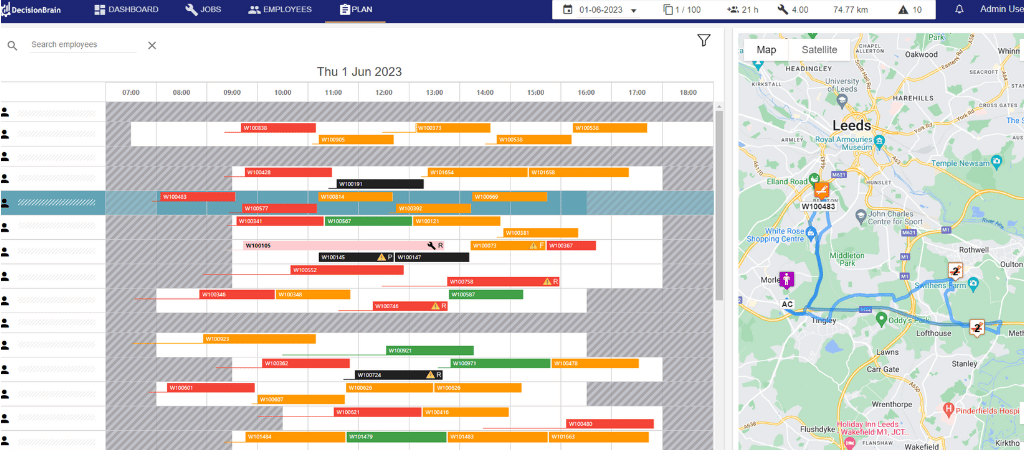
Boost Asset Uptime & Efficiency with Maintenance Planner.