

Solution
Maintenance
Industry
Elevator & Escalator Industry
Location
Worldwide (Global)
Overview
From Frequency-Based Maintenance to AI-Driven Planning at Global Scale
When maintenance planning must scale across countries, regulations, and millions of data points, traditional approaches quickly reach their limits. Discover how a global leader in the Elevator & Escalator Industry embraced IIoT (Industrial Internet of Things) and AI to transform maintenance planning worldwide.
A global leader in the Elevator & Escalator Industry set out to transform its Asset Performance Management (APM) process. Managing one million elevators operating under different Regulatory Compliance frameworks, usage patterns, and service-level agreements, the company needed to move away from rigid, frequency-based maintenance schedules towards a data-driven, automated, and scalable approach.
Together with DecisionBrain, the company implemented an AI-powered maintenance planning solution capable of dynamically adapting maintenance plans to the real usage and specific constraints of each asset. By leveraging IIoT data, advanced optimization techniques, heuristics, and machine learning, the solution determines the optimal timing for every field technician activity. This generates efficient, compliant, and actionable maintenance plans at scale, significantly reducing the Total Cost of Ownership (TCO) for each asset while remaining flexible to local regulations.
Challenges
The Challenge: Scaling Maintenance Planning Across Countries, Assets, and Regulations
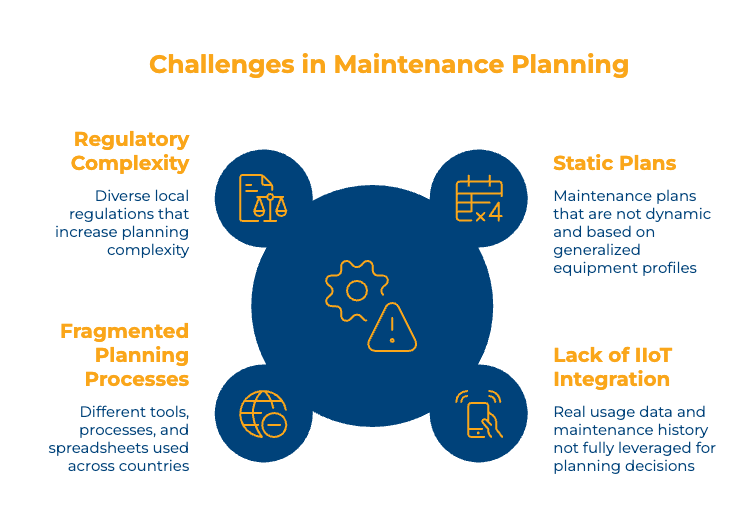
The company’s existing maintenance planning processes were not designed to support its operational scale or strategic objectives. Maintenance plans were largely static, based on generalized equipment profiles and fixed frequencies, which often resulted in unnecessary visits, avoidable downtime, and inefficient Workforce Optimization.
Although IIoT data was available, the planning approach was unable to leverage real usage signals or maintenance history, limiting the ability to dynamically prioritize tasks and optimize maintenance timing at the asset level.
These limitations were amplified by the company’s global footprint. Planning tools and processes varied widely across countries, sometimes relying on spreadsheets, while local regulatory requirements further increased complexity. With millions of elevators operating worldwide, the company needed a unified, automated, and scalable maintenance planning approach that could adapt to local Regulatory Compliance without sacrificing consistency or performance.
Solution
The Solution: A Fully Automated, AI-Driven Maintenance Planning Platform
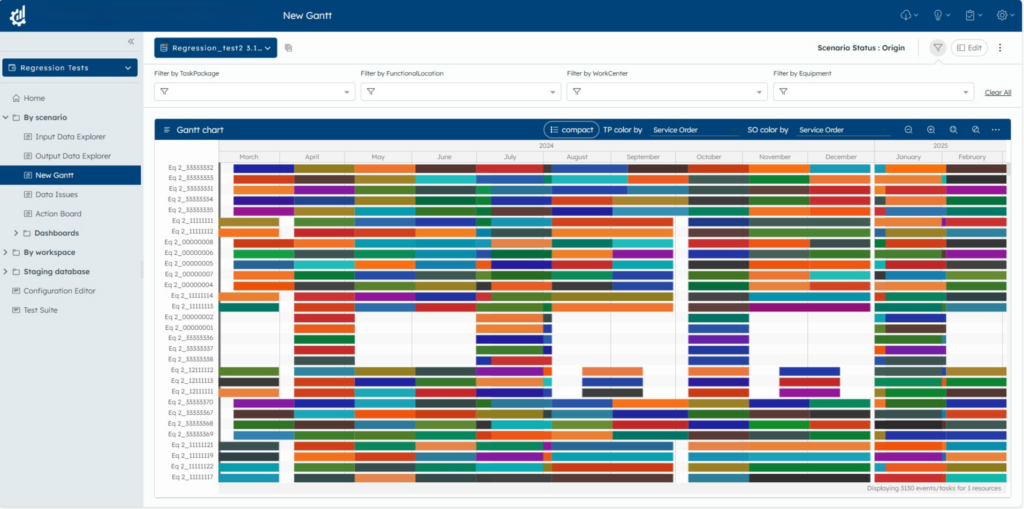
DecisionBrain and the company co-developed a dynamic maintenance planning system fully integrated into the company’s core operational platform. The solution automatically generates and continuously updates maintenance plans based on the real usage of each individual asset.
Initially built on Linear Programming (LP), the solution evolved as it scaled worldwide. To support global deployment and accommodate diverse regulatory requirements, the platform incorporates a combination of optimization approaches, including heuristic algorithms and rule-based maintenance cycles aligned with local regulations. This flexible architecture allows the system to balance optimization performance with practical constraints, enabling it to adapt to different operational contexts while maintaining efficiency and scalability.
How Can Predictive Maintenance Improve Planning Decisions?
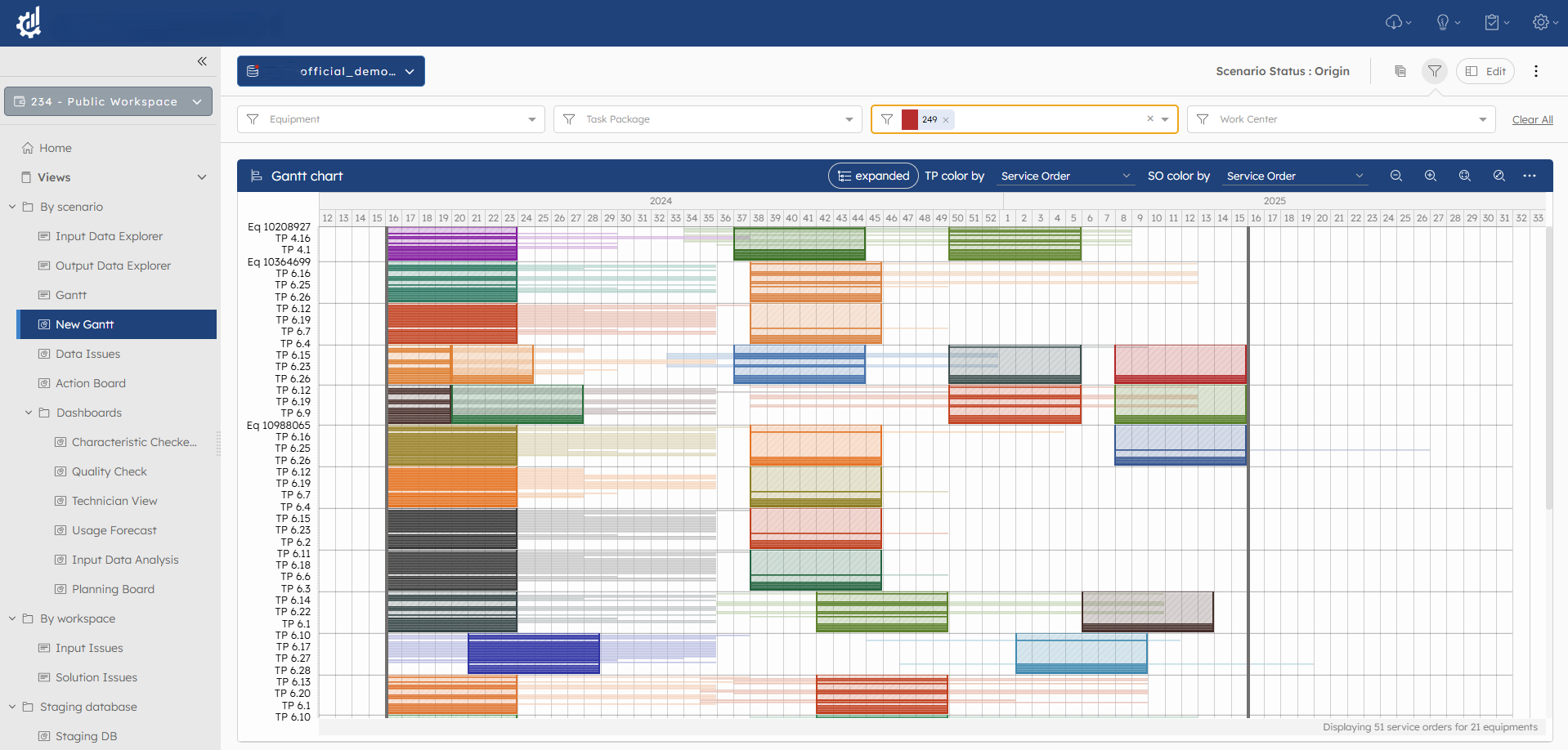
Beyond planning regular maintenance visits, the solution also incorporates predictive capabilities that allow organizations to anticipate maintenance needs and plan interventions more efficiently. By forecasting asset and component usage patterns, the platform enables predictive maintenance, allowing technicians to perform additional tasks during already scheduled visits when a potential need is predicted.
For example, if a visit is already planned to comply with country-specific regulatory requirements, and the system predicts that a component may soon require servicing, the technician can address both tasks during the same visit. This enables maintenance managers to take a more opportunistic approach to planning and scheduling, combining predicted maintenance needs with already scheduled visits.

Operational Capabilities Behind Predictive Maintenance
The solution provides several capabilities designed to support predictive and opportunistic maintenance planning:
- Predicts the usage patterns of each component and asset
- Computes maintenance requirements for each component based on usage patterns, contractual constraints, IoT signals, and safety procedures
- Bundles maintenance tasks across components according to engineering rules, contractual constraints, geographical location, and efficiency goals
- Plans opportunistic maintenance based on actual asset usage rather than fixed preventive cycles
- Computes spare parts requirements and highlights potential out-of-stock risks
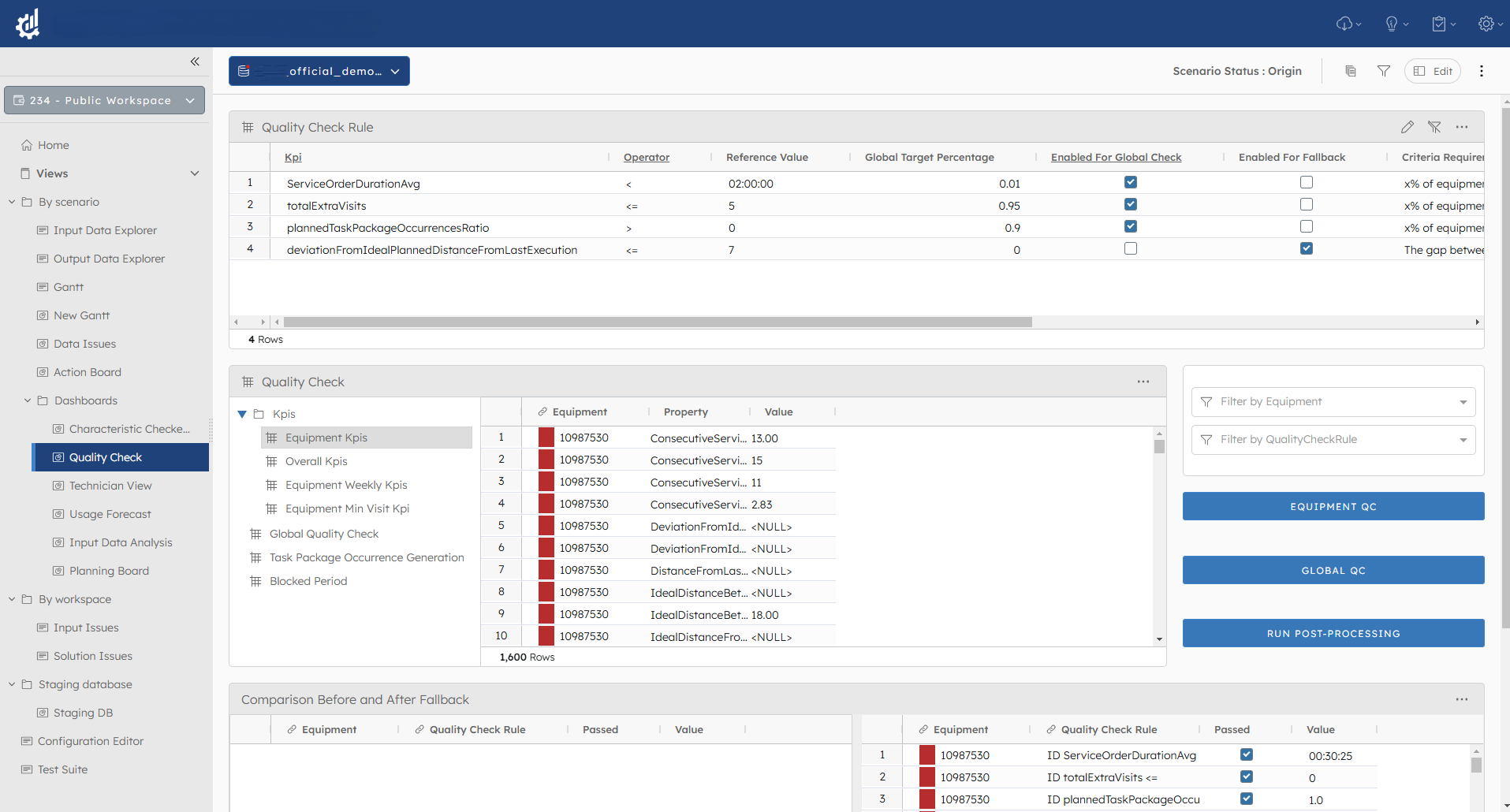
- Operates fully automatically, including configurable quality checks and fallback strategies
Results
The Results: A Scalable, Robust, and Future-Proof Maintenance Transformation
The solution is now live in 45 countries, managing maintenance planning for almost one million elevators, with additional countries scheduled for onboarding. Through this transformation, the company successfully shifted from manual, frequency-based maintenance to a fully automated, AI-driven planning approach.
Key Operational Benefits
- Operational Efficiency & Workforce Optimization: Reduction of unnecessary visits and improved technician routing, increasing asset availability and labor productivity.
- Improved Safety for Technicians and Occupants: Maintenance planned with safety constraints, reducing exposure to high-risk interventions and ensuring proper conditions for critical equipment servicing.
- Spare Parts Availability and Logistics Optimization: Anticipation of spare parts needs to determine quantities, locations, and timing, reducing stockout risks and operational disruptions, particularly for remote or hard-to-reach assets.
- Reduced Environmental Impact: Optimized maintenance planning reduces unnecessary travel, energy consumption, and material waste, contributing to sustainability objectives.
Technology & Strategic Capabilities
- Adaptive and Predictive Maintenance: Plans dynamically adjust to real operating conditions using IoT data and machine learning to forecast asset behavior and schedule interventions at the optimal time, reducing Total Cost of Ownership (TCO).
- AI and IoT-Driven Decision Making: Real-time data and advanced analytics embedded directly into maintenance planning processes.
- Performance at Scale: The platform processes large volumes of operational data while maintaining fast execution times in production environments.
- Global Consistency with Local Compliance: A unified planning framework ensures operational consistency while respecting country-specific regulations and constraints.
This long-term collaboration demonstrates DecisionBrain’s ability to deliver robust, scalable AI solutions that evolve with the client’s needs, supporting both immediate operational gains and long-term strategic objectives.
Want to learn more? Discover how our maintenance optimization solutions can help your business thrive.
Other Customer Stories