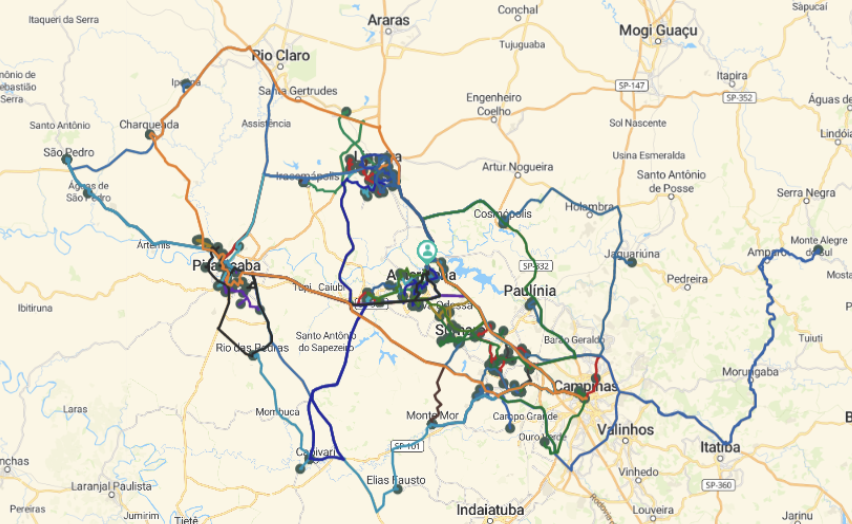
Network of optimized transport routes.

Solution
Logistics
Industry
Logistics
Location
South America
Overview
Every day, over 67,000 delivery vehicles clog Bogotá’s streets, intensifying congestion and releasing more than 850,000 tonnes of CO₂ into the air. How do we turn this challenge into an opportunity for smarter, cleaner mobility?
In 2023, our team joined the Climate Smart Cities Challenge, a global initiative led by UN-Habitat and Viable Cities Sweden to accelerate the transition toward climate-neutral cities. The challenge invited forward-thinking organizations worldwide to present innovative solutions capable of reducing carbon emissions while improving quality of life in four major urban centers: Bogotá (Colombia), Bristol (United Kingdom), Curitiba (Brazil), and Makindye Ssabagabo (Uganda).
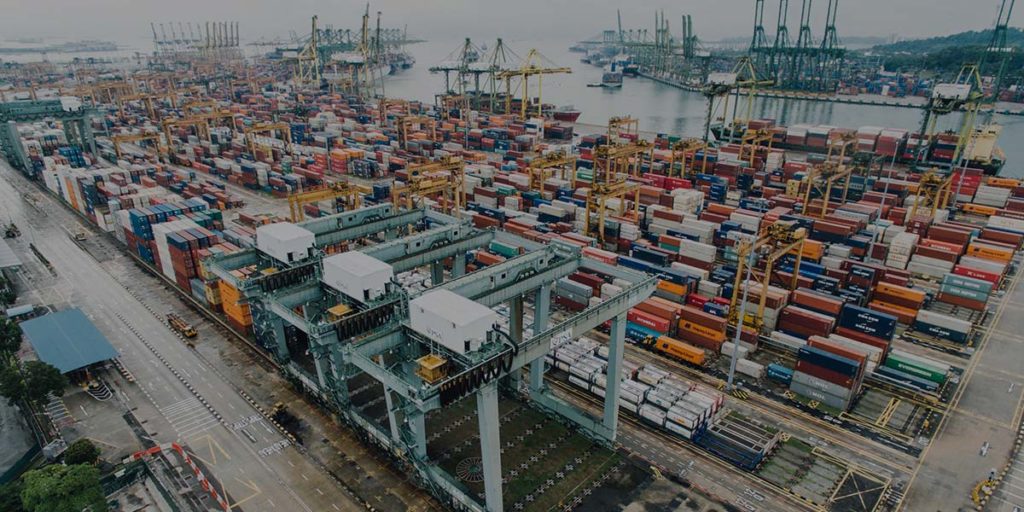
For Bogotá, the core problem centered on a significant urban logistical inefficiency: the movement of freight from peripheral manufacturing zones into the city center. The city relied on a high volume of individually contracted trucks, often small, frequently underutilized, and at times traveling nearly empty, contributing to costly supply chain inefficiency. Instead of consolidated loads, each supplier operated independently, sending separate vehicles along similar routes. This fragmentation contributed significantly to traffic congestion, elevated emissions, and unnecessary operational waste.
Our decision to join the challenge was guided by a single, fundamental principle: innovation must not only advance business performance but actively contribute to a healthier planet. We viewed Bogotá’s logistical bottleneck not only as a technical problem to be solved, but as an opportunity to apply our expertise in advanced optimization to support a solution with clear environmental benefits – driving carbon emissions reduction, and helping the city move toward a more sustainable urban mobility system.
Challenges
International Consortium for Advanced Urban Freight Optimization
After advancing through the first stage, where we proposed an advanced optimization system to redesign routing and truck loading, we were invited to form a consortium with other international innovators participating in the challenge. This collaboration led to the creation of GreenRoutes, a partnership designed to bring together complementary expertise and deliver a comprehensive, end-to-end intelligent logistics solution.
Our consortium included:
- DecisionBrain (France): advanced route and load optimization, defining optimal pickup and delivery schedules to reduce congestion, fuel consumption, and emissions;
- BeeMetrix (France): a Transportation Management System (TMS) providing a seamless digital interface for suppliers to input and manage their next-day delivery orders;
- ZaiNar Technologies (California, USA): high-precision real-time truck tracking using cellular network signals rather than GPS, enabling accurate location data and real-time fleet visibility;
- Accendo (Colombia): systems integration and the main interface with Bogotá’s municipal administration, ensuring alignment with local infrastructure and data flows.
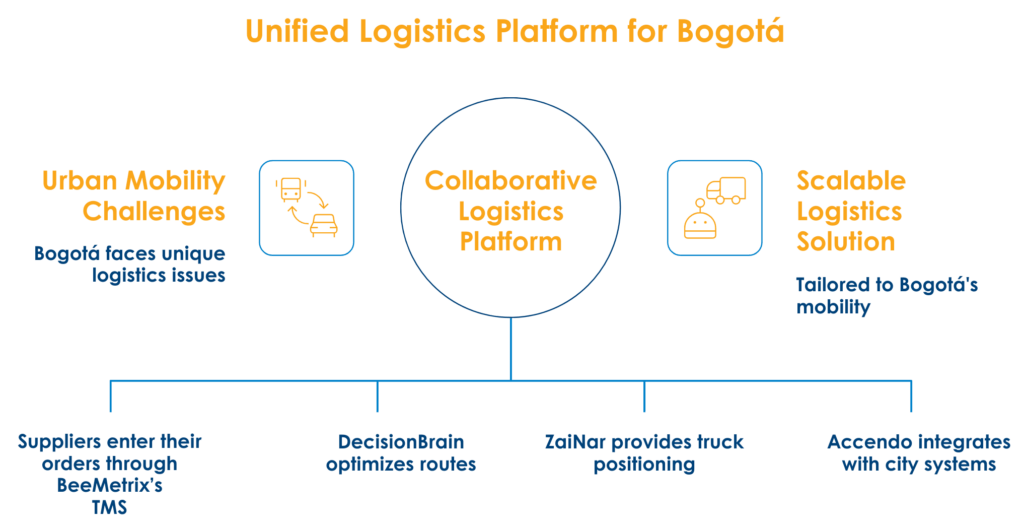
Together, we built a unified, intelligent logistics platform: suppliers enter their orders through BeeMetrix’s Transportation Management System (TMS); DecisionBrain optimizes routes and load plans; ZaiNar provides real-time truck positioning; and Accendo ensures full integration with the city’s systems. This collaborative structure allowed GreenRoutes to deliver a scalable and robust logistics solution tailored to Bogotá’s unique urban mobility challenges.
Solution
Driving Sustainable Change Through Technology: Reducing Carbon Emissions
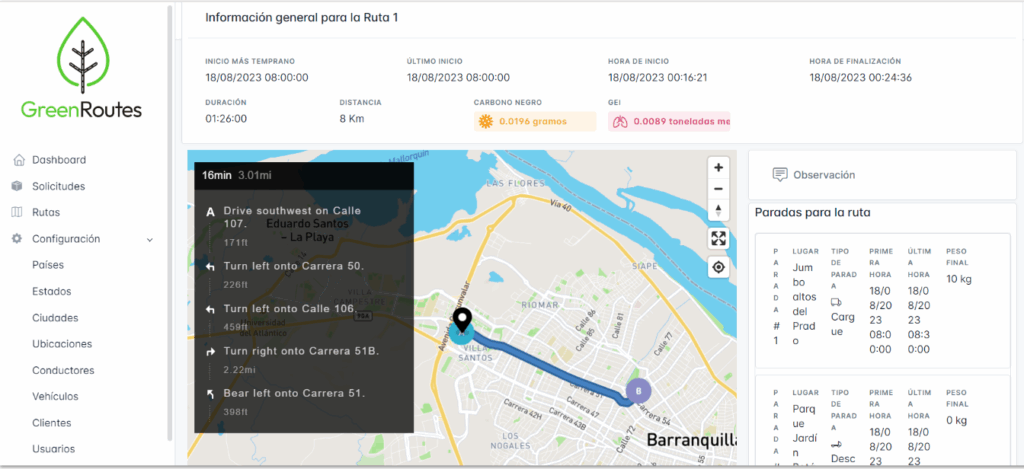
Our proposal was selected as a winner, enabling us to develop a functional prototype of the GreenRoutes platform. The system was successfully built, demonstrating how coordinated logistics and intelligent optimization can deliver measurable, scalable emissions reduction and cut fuel consumption and traffic congestion.
More than a technical achievement, GreenRoutes represents our commitment to applying technology to create tangible environmental value. As a company, we believe innovation has its greatest impact when it supports a more sustainable planet, and this project is a clear example of how advanced logistics optimization and collaborative systems can contribute to cleaner, more resilient urban mobility.
Each project we undertake is an opportunity to use our expertise with purpose: optimizing fleet movement, supporting climate-neutral initiatives, and helping cities move toward a more sustainable future.
Innovation matters, but innovation that drives environmental progress is what truly moves us forward.
Conclusion: A Blueprint for Cleaner Cities
The success story of GreenRoutes in Bogotá provides a powerful blueprint for other urban centers around the world. It demonstrates that by addressing systemic inefficiencies with collaborative, intelligent platforms, we can unlock the potential for remarkable reductions in emissions and congestion while improving the quality of urban life. This model shows that the path to more sustainable and resilient cities isn’t just about bold new inventions, but about smartly coordinating the resources we already have.
It leaves us with a critical question to consider: What hidden inefficiencies in our own cities could be transformed into opportunities for a greener future?
Want to learn more about our logistics solutions?
See how Toyota reduced transportation costs by 10% and cut planning time from days to minutes.
Other Customer Stories